Jay Fenlason's Hack

|
NetHack Versions |
|
|
|
|
|
|
|
|
|
Hack is a roguelike role-playing game written by Jay Fenlason, with contributions from Kenny Woodland, Mike Thome, and Jon Payne, from which all subsequent versions of Hack and all versions of NetHack are descended. Jay Fenlason's Hack is the term given to the original Hack, without the extensive modifications by Andries Brouwer which are present in the more widely distributed version.
At present, source code for the original was long believed to be unavailable online; however, a preserved copy of Jay Fenlason’s original Hack project tree has since surfaced via academic and archival channels. This project tree, preserved by Brian Harvey, contains the working directory for the USENIX 82.1 submission as well as evidence of further iterative development.[1]
A DOS port with user interface changes is also available in binary form; all of Andries Brouwer’s versions are available as source code, and the source code for an early variant dubbed "Hack for PDP-11", based on an early draft of Brouwer’s version, is also available.
Contents
Background
Development of Hack began in the summer of 1981 when Jay Fenlason and other sophomores at Lincoln-Sudbury Regional High School in Massachusetts were hired as teaching assistants by their computing director Brian Harvey for his summer Logo workshop at San Francisco State University. They also spent time at UC Berkeley where a student introduced Jay to Rogue. After 8 hours of playing between two trips he began to recreate the workings in Logo on Apple II, the first development version of Hack (likely named HACK due to Apple DOS’s capital limitation) meant to improve on the shortcomings of Rogue like one-track aggressive monsters and their capital-only icons and item nonstacking.[2]
Lincoln-Sudbury’s student Computer Center Users Society were allowed by Harvey to self direct rather than be assigned formal graded coursework.[3] There they had access to a PDP-11 16-bit minicomputer running Unix, where Jay, according to the read me in Hack’s distribution, ported the Logo version as his first semester programming project. He credited Kenny Woodland for various and BUZZ(), Mike Thome for the chamelian [sic], and Jon Payne for the badly-working lock file and CURS(). Due to the memory constraint, he couldn’t fulfil his other wanted improvements over Rogue of far lighting, containers, and set dungeon levels.[2]
Jay, Jon who wrote the text editor JOVE, and the other computer club members copied their software onto a 9-track tape for Harvey to mail to USENIX in January[2], and that with software from other groups was included in the USENIX 1982 first distribution tape mailed out in June and offered at the summer conference between July 6 and 9.[4] Although no online copy of the tape is known to exist, Hack was popular and one of the most notable programs included along with JOVE.[5]
Variants
The original Hack developed by Jay Fenlason is now known to survive in the form of a preserved project tree, including the version submitted to the USENIX 82.1 distribution tape and evidence of further iterative development. Several derivative and ported versions of Hack were also created during the early 1980s. This section describes notable variants and ports that circulated independently of the original development tree.
Hack 1.21 (hack121)
A 16-color CGA-mode DOS port of Jay Fenlason's Hack is available in binary form at Ali Harlow's website as hack121.zip (mirror). It is known as "hack121", after the filename of its distribution package.
It refers to itself as version "1.21 (Slak was here!)", "Slak" apparently being Jay Fenlason himself: his Usenet post signature includes a vanity bang path where the last syllable liaises to "slack" if "!" were read as "l" from lsrhs!hack. bbncca was the domain for BBN Communications Corp., the first ever email host. His account was really "notice", for the equivalent global email address notice@lsrhs.UUCP, in a more ordinary path utzoo!linus!philabs!cmcl2!harvard!think!mit-eddie!genrad!grkermi!lsrhs!notice. He left score files in Hack and Hack 1.21 as Jay the Hacker and J. Random Hacker, each.
Nonetheless, some changes have clearly been made by the porter (IBMgraphics and the fusion of mklev into hack). See this newsgroup posting for a possible lead as to who ported it.
No source code for this program is known to exist, and it is not known for sure if the porter made any modifications which affect gameplay. This is probably the closest to the original that is known to be extant.
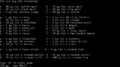
This is the shop at the start of hack121. (Click thumbnail to view image.)
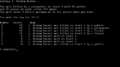
Hack121 can be a difficult game.


Hack for PDP-11 and PC/IX Hack
Hack for PDP-11 is a variant developed by Michiel Huisjes and Fred de Wilde at the Free University (VU) in Amsterdam† (apparently based upon a early draft of Andries Brouwer's Hack, which was copied from his user area without his permission) and published on Usenet in February 1985. A port of this to a Unix clone called PC/IX (with a slightly different set of potions) was published in May by "peterb at pbear".
Despite its name, Hack for PDP-11 appears to require a nonstandard compiler, whereas it can be compiled on some later UNIX systems such as 4.2BSD without much work; it is possible that the compiler used was a contemporary version of the Amsterdam Compiler Kit, which dates from the early 1980s and which was developed at the VU.
The developers summarize their changes, in the Hack for PDP-11 readme, as:
- "One of the main problems of Hack is its size. If you add about 1000 bytes of text more, your text segment will be to big. Therefore we saved text wherever this was possible. We removed the function fscanf(), and made the record file binary. To show the contents, use the program show (with flag -r).
- "Some additions we (Fred de Wilde and Michiel Huisjes) made are
- - The Vault
- - The Swamp
- - The Zoo
- - The Graveyard
- - Maxlevel = 40
- - Proper Saving
- - Several bugs
- - And many, many more..."
"Proper saving" references the fact that saving was apparently broken in the sources that they originally obtained (as they mention in comments in the corresponding code).
PDP-11 Hack incorporates a time restriction preventing playing on working hours on weekdays, which grants exceptions for the developers' UIDs, and which is removed in the PC/IX version.
The shar files of both versions are archived at Google Groups:
- Hack for PDP-11 Part 1, Part 2, Part 3, Part 4, Part 5 (Mirror 1, 2, 3, 4, 5).
- PC/IX Hack Part 1, Part 2, Part 3, Part 4, Part 5 (Mirror 1, 2, 3, 4, 5).
Hack 1.0
Hack 1.0 was developed by Andries Brouwer and posted to Usenet in December 1984. All other versions of Hack and NetHack are descended from this version.
Main differences from Andries Brouwer’s Hack
Fenlason’s original Hack differs substantially from Andries Brouwer’s Hack 1.0 in both structure and gameplay systems. The preserved Fenlason codebase contains a single-character dungeon exploration game without roles, pets, shops, or other complex subsystems that later became central to Hack and NetHack.
Hack 1.0 introduces player roles, a formalized end goal centered on the Amulet of Yendor, a pet system, and multiple new gameplay subsystems including shops, special room types, and the segmented worm mechanic. Brouwer later described Hack 1.0 as being almost entirely rewritten relative to Fenlason’s original sources.
Some intermediate variants complicate this comparison. The DOS binary known as hack121 begins the game in a shop and includes an equipment purchase screen, but no source code for this version is known to survive. As a result, it is unclear whether these features reflect an otherwise lost later version of Fenlason’s Hack or were introduced by the porter.
Similarly, Hack for PDP-11 and PC/IX adds numerous gameplay systems absent from the original Fenlason code, including pets, vaults, zoos, swamps, and graveyards. Documentation for these ports indicates that many of these features were implemented by the port developers themselves rather than inherited from Fenlason’s original work.
Special room types
No special room types are present in the version of Hack submitted to the USENIX 82.1 software distribution tape. The preserved USENIX version contains no shops or other designated special rooms.
The DOS binary known as hack121 begins the game in a shop. This represents the earliest known appearance of a shop in any Hack-related variant. As no source code for hack121 is known to survive, and the provenance of the port is uncertain, it is not possible to determine whether the shop was introduced by the porter or derived from a later, now-lost version of Fenlason’s Hack.
Hack for PDP-11 and PC/IX includes shops as well as additional special room types such as zoos, graveyards, swamps, and vaults. According to the PDP-11 Hack documentation, these room types were implemented by the port’s developers themselves, with shops already present in the codebase they obtained. Vaults in particular are implemented in a manner distinct from later Hack and NetHack versions.
Andries Brouwer’s Hack reintroduces shops and expands the use of special room types, forming the basis for their continued development in later Hack and NetHack variants.
Mazes
PDP-11 Hack appears to contain the original makemaz() implementation of Fenlason's team, given this source code comment which does not appear in the refactored version of the function in Hack 1.0, and appears to reference Kenny Woodland by his first name:
/* This is all Kenny's fault. He seems to have his x and y reversed */
Bestiary
The bestiaries of hack121 and PDP-11 Hack are listed below, along with the Hack 1.0 bestiary for comparison. Other monster descriptions may be lurking in other parts of the hack121 binary; therefore, this list cannot be considered as necessarily the final word for that version.
Main monster list
These are given in the order of their appearance in the code; the lists are quite similar.
| Fenlason Hack | Hack121 | PDP-11 Hack | Hack 1.0 |
|---|---|---|---|
| bat (B) | bat (b) | bat (B) | bat (B) |
| gnome (G) | lizard (l) | gnome (G) | gnome (G) |
| hobgoblin (H) | goblin (g) | hobgoblin (H) | hobgoblin (H) |
| jackal (J) | jackal (j) | jackal (J) | jackal (J) |
| kobold (K) | kobold (k) | kobold (K) | kobold (K) |
| leprechaun (L) | pickpocket (p) | leprechaun (L) | leprechaun (L) |
| giant rat (r) | giant rat (r) | giant rat (r) | giant rat (r) |
| acid blob (a) | acid blob (a) | acid blob (a) | acid blob (a) |
| floating eye (E) | evil eye (e) | floating eye (E) | floating eye (E) |
| homonculous [sic] (h) | hurkle (h) | homunculus (h) | homunculus (h) |
| imp (i) | neevil (n) | imp (i) | imp (i) |
| orc (O) | orc (o) | orc (O) | orc (O) |
| yellow light (y) | yellow light (y) | yellow light (y) | yellow light (y) |
| zombie (Z) | zombie (z) | zombie (Z) | zombie (Z) |
| giant ant (A) | giant ant (A) | giant ant (A) | giant ant (A) |
| fog cloud (f) | fog cloud (f) | fog cloud (f) | fog cloud (f) |
| nymph (N) | robber (R) | nymph (N) | nymph (N) |
| piercer (p) | stalactoid (s) | piercer (p) | piercer (p) |
| quasit (Q) | queevolt (q) | quasit (Q) | quasit (Q) |
| quivering blob (q) | quivering blob (Q) | quivering blob (q) | quivering blob (q) |
| violet fungi [sic] (v) | grabber (G) | violet fungi (v) | violet fungi (v) |
| giant beetle (b) | nepto (N) | giant beetle (b) | giant beetle (b) |
| centaur (C) | centaur (c) | centaur (C) | centaur (C) |
| cockatrice (c) | cockatrice (C) | cockatrice (c) | cockatrice (c) |
| gelatenous cube [sic] (g) | ghost (') | gelatinous cube (g) | gelatinous cube (g) |
| jaguar (j) | jaguar (J) | jaguar (j) | jaguar (j) |
| killer bee (k) | killer bee (K) | killer bee (k) | killer bee (k) |
| snake (S) | viper (v) | snake (S) | snake (S) |
| freezing sphere (F) | ice ball (i) | freezing sphere (F) | freezing sphere (F) |
| owlbear (o) | giant bear (B) | owlbear (o) | owlbear (o) |
| rust monster (R) | oxidizer (O) | rust monster (R) | rust monster (R) |
| giant scorpion (s) | unox (u) | giant scorpion (s) | scorpion (s) |
| teleporter (t) | teleporter (t) | teleporter (t) | tengu (t) |
| wraith (W) | wraith (w) | wraith (W) | wraith (W) |
| yeti (Y) | snowman (S) | long worm (w) | long worm or wumpus (w) |
| displacer beast (d) | octopus (0) | large dog (d) | large dog (d) |
| leocrotta (l) | xyloman (x) | leocrotta (l) | leocrotta (l) |
| mimic (M) | faker (F) | mimic (M) | mimic (M) |
| minotaur (m) | minotaur (m) | minotaur (m) | found at end of table |
| troll (T) | troll (T) | troll (T) | troll (T) |
| ugod (u) | ugod (U) | ugod (u) | unicorn (u) |
| xerp (x) | xerp (X) | yeti (Y) | yeti (Y) |
| invisible stalker (I) | phase shifter (P) | invisible stalker (I) | stalker (I) |
| umber hulk (U) | hydra (H) | umber hulk (U) | umber hulk (U) |
| vampire (V) | vampire (V) | vampire (V) | vampire (V) |
| wumpus (w) | wumpus (W) | xorn (X) | xorn (X) |
| xorn (X) | rock lobster (L) | xerp (x) | xan (x) |
| zelomp (z) | zelomp (Z) | zelomp (z) | zruty (z) |
| chameleon (:) | chameleon (:) | chameleon (:) | chameleon (:) |
| dragon (D) | dragon (D) | dragon (D) | dragon (D) |
| ettin (e) | energar (E) | ettin (e) | ettin (e) |
| lurker above (~) | floor fiend (;) | lurker above (') | lurker above (~) |
| neo-otyugh (n) | landshark (&) | neo-otyugh (n) | nurse (n) |
| trapper (,) | argus (}) | trapper (,) | trapper (,) |
| purple worm (P) | mega-worm (M) | purple worm (P) | purple worm (P) |
| demon (&) | demon (d) | demon (&) | demon (&) |
| minotaur (m) | |||
| shopkeeper (@) |
Other monsters kept in separate structures
All versions of Hack and NetHack prior to NetHack 3.0.0 have various monster description structures floating around in their source code, for monsters with special functions. These are listed here, with monsters having the same function in the same row. The large dog appears both here and in the above table because the structure in the above table is used for wild dogs, and the one shown below is used for pets. In Hack 1.0, the shopkeeper is moved to the main monster list.
| Fenlason Hack | Hack121 | PDP-11 Hack | Hack 1.0 |
|---|---|---|---|
| vampire bat (B) | vampire bat (b) | ||
| shopkeep (☺) | shopkeeper (@) | in main monster table | |
| guard (☺) | treasurer (@) | guard (@) | |
| little dog (d) | little dog (d) | ||
| dog (d) | dog (d) | ||
| large dog (d) | large dog (d) | ||
| giant eel (;) | |||
| ghost (tab) |
The character for the ghost is coded as a tab character, or '\t'. This is likely to be a bug or an arcane hack.
The giant eel appears in essentially its modern form. The current version of AEB Hack at the release of the PDP-11 Hack was 1.0.1, and this version did not have giant eels. Giant eels do appear in Hack 1.0.2, and the source code credits the publishers of PDP-11 Hack, Michiel Huisjes and Fred de Wilde, for the inspiration. That credit is still present in NetHack 3.4.3[6].
Available objects
Hack121, PDP-11 Hack, and Hack 1.0 show many similarities in their object lists. Except as noted, the object lists are presented in the order in which they occur in the code. PC/IX Hack is the same as PDP-11 Hack except as otherwise noted.
Armor
In Hack121, the only armor types available are suits of armor and shields; PDP-11 Hack implements two additional suits of armor and an elven cloak. Hack 1.0 adds a helmet, a shield, and a pair of gloves, allowing five pieces of armor to be worn at the same time. All armor is worn or removed using the same command.
The list of hack121 suits is reordered here to match the PDP-11 and Hack 1.0 orders:
| Hack121 | PDP-11 | Hack 1.0 |
|---|---|---|
| helmet | ||
| plate mail | plate mail | plate mail |
| splint mail | splint mail | splint mail |
| banded mail | banded mail | |
| chain mail | chain mail | chain mail |
| scale mail | scale mail | scale mail |
| ring mail | ring mail | ring mail |
| studded leather armor | studded leather armor | |
| leather armor | leather armor | leather armor |
| elven cloak | elven cloak | |
| elfin chain mail | ||
| (not armor) | shield | |
| pair of gloves |
Food
The available food items are as follows:
| Hack121 | PDP-11 | Hack 1.0 |
|---|---|---|
| food ration | food ration | food ration |
| tripe ration | tripe ration | tripe ration |
| beef jerky | pancake | pancake |
| dead lizard | dead lizard | dead lizard |
| steak | cookie | fortune cookie |
| carrot | ||
| tin | ||
| orange | orange | orange |
| apple | apple | apple |
| pear | pear | pear |
| melon | melon | |
| banana | banana | banana |
| spinach | candy bar | candy bar |
| egg | egg | egg |
| clove of garlic | ||
| corpse |
Both spinach and steak may randomly increase strength in hack121.
The dead lizard has no special properties in hack121 or Hack PDP-11, and is simply an item of food. In Hack 1.0, it can relieve confusion, but has no effect on cockatrices: stoning by cockatrice hissing is an instadeath in all three of these versions of Hack.
Weapons
Hack121 and Hack for PDP-11 offer the same set of weapons. Hack 1.0 adds a few to these:
| hack121 | PDP-11 | Hack 1.0 |
|---|---|---|
| arrow | arrow | arrow |
| sling bullet | sling bullet | sling bullet |
| crossbow bolt | crossbow bolt | crossbow bolt |
| dart | dart | dart |
| rock | ||
| boomerang | ||
| mace | mace | mace |
| axe | axe | axe |
| flail | flail | flail |
| long sword | long sword | long sword |
| two handed sword | two handed sword | two handed sword |
| dagger | dagger | dagger |
| worm tooth | ||
| crysknife | ||
| spear | spear | spear |
| bow | bow | bow |
| sling | sling | sling |
| crossbow | crossbow | crossbow |
Potions
Several potions in Hack121 have disappeared in later versions. Hack 1.0 adds one potion over PDP-11.
| Hack121 | PDP-11 | PC/IX | Hack 1.0 |
|---|---|---|---|
| restore strength | restore strength | restore strength | restore strength |
| alcohol | booze | confuse monster‡ | booze |
| second sight | |||
| forgetfulness | |||
| extra hit points | |||
| invisibility | invisibility | invisibility | invisibility |
| fruit juice | fruit juice | fruit juice | fruit juice |
| healing | healing | healing | healing |
| paralysis | paralysis | paralysis | paralysis |
| monster detection | monster detection | monster detection | |
| object detection | object detection | object detection | object detection |
| poison | sickness | sickness | sickness |
| confusion | confusion | confusion | confusion |
| potion of gain strength | gain strength | gain strength | |
| speed | speed | speed | speed |
| blindness | blindness | blindness | blindness |
| gain level | gain level | gain level | gain level |
| extra healing | extra healing | extra healing | extra healing |
| levitation |
‡ Hack for PDP-11 replaced the scroll of confuse monster with a scroll of losing. The porters to PC/IX reinstated the former as a potion.
Scrolls
Available scrolls are as follows. The Hack121 list is ordered in an attempt to match the other two.
| hack121 | PDP11 | Hack 1.0 |
|---|---|---|
| enchant armor | enchant armor | enchant armor |
| (different location) | (different location) | destroy armor |
| confuse monster | losing | confuse monster |
| destroy monsters | ||
| scare monsters | curse levels | scare monster |
| ressurection [sic] | ||
| blank paper | ||
| remove curse | remove curse | remove curse |
| enchant weapon | enchant weapon | enchant weapon |
| create monster | create monster | damage weapon |
| damage weapon | damage weapon | create monster |
| taming | ||
| genocide | genocide | genocide |
| rust armor | destroy armor | (different location) |
| light | light | light |
| teleportation | transportation | teleportation |
| gold detection | gold detection | gold detection |
| food detection | ||
| identify | identify | identify |
| magic mapping | magic mapping | magic mapping |
| amnesia | ||
| fire | fire | fire |
| punishment | ||
| charge wand |
For PDP-11:
- The "scroll of losing" takes away the hero's entire inventory and scatters it about the level. It is noted in source code comments as replacing the scroll of confuse monster.
- The "scroll of curse levels" appears to curse the hero himself, causing shopkeepers to be angry and all picked-up items to become cursed. The scroll of remove curse will rescind this effect, and in these versions it is not itself affected by curses.
- The scroll of transportation, as well as teleporting, functions as an elevator. The code carries the notice "Extended by Michiel and Fred: One can jump between levels".
Wands
Available wands are as follows. The Hack121 list is reordered in an attempt to match the other two:
| Hack121 | PDP-11 | Hack 1.0 |
|---|---|---|
| light | light | light |
| trap detection | secret door + trap detection | secret door detection |
| create monster | create monster | create monster |
| wishing | ||
| wonder | ||
| striking | exhaustion | striking |
| slow monster | slow monster | slow monster |
| speed monster | speed monster | speed monster |
| undead turning | undead turning | |
| polymorph | polymorph | polymorph |
| frighten monster | ||
| cancellation | cancellation | cancellation |
| teleport monster | teleport monster | teleport monster |
| make invisible | ||
| digging | digging | digging |
| monster invisibility | ||
| magic missile | magic missile | magic missile |
| fire | fire | fire |
| sleep | sleep | sleep |
| cold | cold | cold |
| death | death | death |
| confusion | ||
| door closing |
In Hack121, the wand of wonder is a random wand of another type which changes each time you zap it. In D&D, a wand of wonder works as a random wand of another type.
Note: In iLarn (and in ULarn), a wand of wonder prevents the player from falling down holes when in the main inventory. It could serve the same purpose here, as this would not be very apparent to most players.
Rings
Available rings are as follows. For hack121, the order has been changed to match the other two versions.
| Hack121 | PDP-11 | Hack 1.0 |
|---|---|---|
| adornment | adornment | adornment |
| teleportation | teleportation | teleportation |
| regeneration | regeneration | regeneration |
| searching | searching | searching |
| see invisible | see invisible | see invisible |
| stealth | stealth | stealth |
| floating | levitation | |
| poison resistance | poison resistance | poison resistance |
| aggravate monster | aggravate monster | aggravate monster |
| hunger | hunger | hunger |
| monster creation | ||
| berzerking | ||
| another chance | ||
| fire and cold resistance | fire resistance | fire resistance |
| cold resistance | cold resistance | |
| protection from magic | protection from shape-changers | protection from shape changers |
| conflict | ||
| gain strength | gain strength | gain strength |
| increase damage | increase damage | increase damage |
| protection | protection | protection |
| increase hit points | ||
| warning | ||
| teleport control |
It is uncertain if the hack121 ring of protection from magic has any connection to the ring of protection from shape changers in the other versions.
Gems
Hack121 appears to have gems, but their function is uncertain. In Hack for PDP-11, they only add to the player's score; neither of these Hacks has unicorns. Hack 1.0 has gems in their modern form.
Other objects
The remaining objects in each game seem to have no connection to each other. Hack121 has these objects:
- the sphere of power
- mirror
- cross
- tinder box
- lantern
- torch
- flask of oil
- shield (which is not a type of armor in this game)
Hack for PDP-11 only has the "amulet of Frobozz", which may be the forerunner of the Amulet of Yendor.
Hack 1.0 has these objects:
- whistle
- magic whistle
- expensive camera
- ice box
- heavy iron ball
- iron chain
- enormous rock
- amulet of Yendor
References
- ↑ Fenlason Hack source tree, GitHub repository preserved by Dan Stormont, accessed 3 February 2026.
- ↑ 2.0 2.1 2.2 David Craddock, "Dungeon Hacks, Chapter 5: When the Inmates Run the Asylum - Hack-ing at Lincoln-Sudbury High School", Game Developer, August 10, 2015.
- ↑ Brian Harvey, "Computer Hacking and Ethics: A Case Study: The Lincoln-Sudbury Regional High School", ACM Select Panel on Hacking, 1985.
- ↑ ;login: Vol. 7, No. 3 (June 1982), USENIX Association.
- ↑ Julie Bresnick, "On the train of life with Nethack’s papa", Linux.com, December 5, 2000.
- ↑ mkroom.c in NetHack 3.4.3, line 447


